







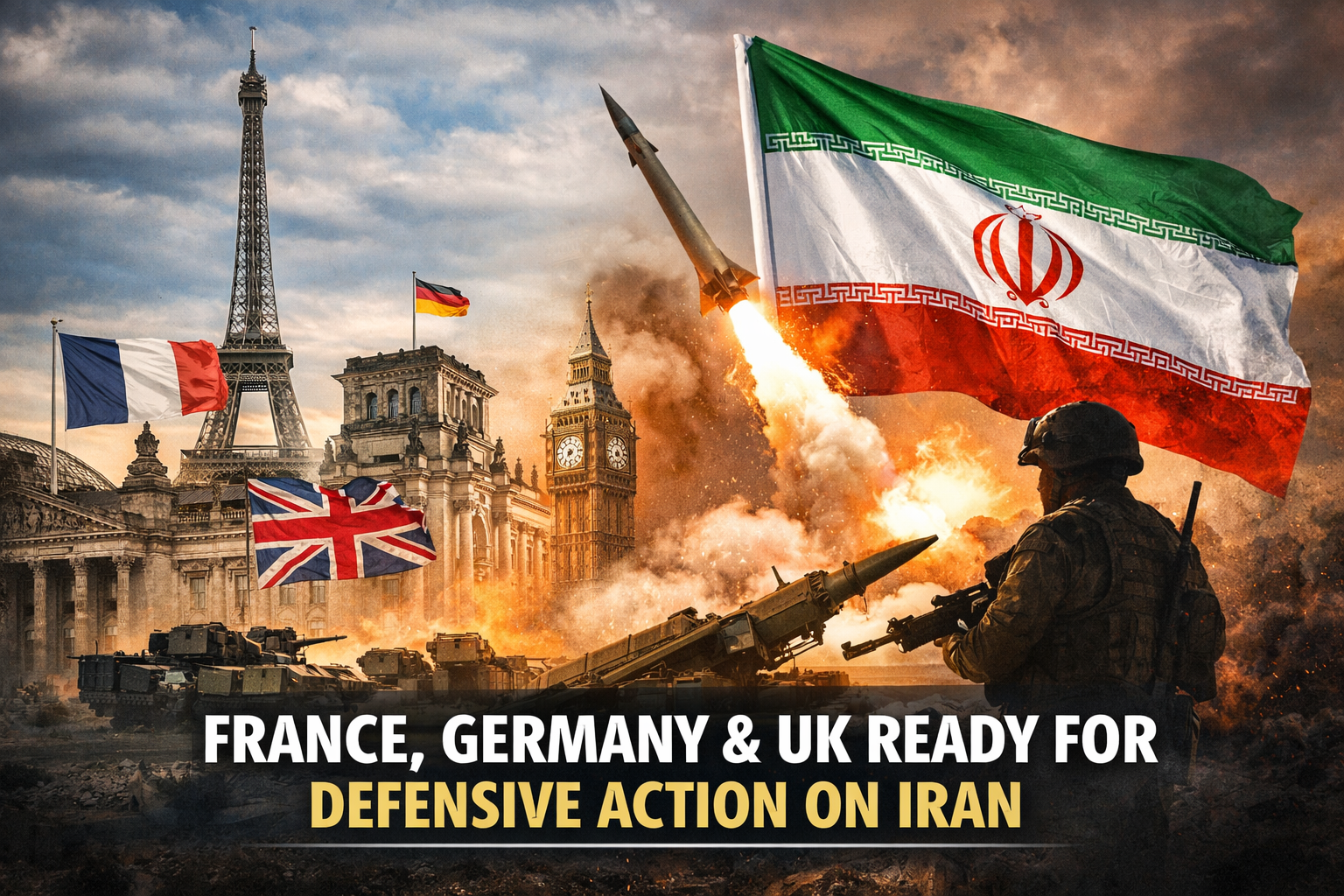
Tensions in the Middle East have risen sharply after France, Germany, and the United Kingdom announced that they are prepared to take defensive action against Iran if necessary. This joint statement has attracted global attention because it signals a serious moment in international relations and raises concerns about regional and global security.
In simple terms, the three European powers have warned that they are ready to protect their interests, citizens, and allies if Iran’s actions threaten stability or security. While they have emphasized that they prefer diplomacy over conflict, they have made it clear that they will not ignore actions they consider dangerous.
This article explains what is happening, why it matters, and what it could mean for global security.
Why Are Tensions Rising?
The current situation developed after a series of missile and drone activities in the Middle East that increased fears of escalation. European leaders expressed concern that these actions could destabilize the region and put international forces and civilians at risk.
France, Germany, and the UK believe that continued military escalation could:
-
Threaten international shipping routes
-
Disrupt oil and energy supplies
-
Endanger European citizens abroad
-
Increase the risk of wider regional conflict
Because of these risks, the three countries felt the need to send a strong and united message.
What Does “Defensive Action” Mean?
When governments talk about “defensive action,” it does not automatically mean launching an attack. It usually refers to measures taken to protect national interests and prevent harm.
Defensive actions may include:
-
Strengthening military presence in sensitive areas
-
Deploying air defense systems
-
Intercepting missiles or drones
-
Coordinating security efforts with allies
-
Taking limited action to neutralize immediate threats
The key word here is “defensive.” The European leaders have said they are not seeking war but are prepared to act if necessary to protect themselves and their partners.
Why Are France, Germany, and the UK Acting Together?
These three countries are among Europe’s most powerful nations and play a major role in global diplomacy and security. When they issue a joint statement, it carries significant weight.
There are several reasons why they are acting together:
1. Shared Security Interests
All three countries have military forces, diplomatic missions, and economic interests in the Middle East. Any instability affects them directly.
2. NATO and Allied Cooperation
The UK, France, and Germany are key members of NATO. Coordination among allies is important when dealing with potential security threats.
3. Protecting International Law
European governments often emphasize the importance of international law and stability. They argue that unchecked escalation could weaken global rules and norms.
How This Affects Global Security
This situation matters far beyond Europe and the Middle East. Here’s why:
Energy Markets
The Middle East is one of the world’s most important energy-producing regions. If tensions increase, oil prices can rise quickly. Higher energy prices affect:
-
Transportation costs
-
Inflation rates
-
Household expenses
-
Global economic stability
Even countries far away can feel the impact.
International Trade
Major shipping routes pass through sensitive areas in the Middle East. If security risks increase, trade routes may face disruption. This can slow global supply chains and increase costs for businesses and consumers worldwide.
Risk of Wider Conflict
Whenever multiple powerful nations become involved in a regional crisis, there is a risk of broader escalation. While no side publicly wants a large-scale conflict, misunderstandings or miscalculations can make situations worse.
This is why diplomatic communication remains extremely important.
Europe’s Shift in Strategy
For many years, European countries focused heavily on diplomacy and negotiations in dealing with Iran. Dialogue, agreements, and sanctions were often the main tools used to manage tensions.
However, the recent statement suggests a stronger security posture. It shows that Europe is willing to combine diplomacy with preparedness. In other words, they are saying:
“We prefer peace, but we are ready if peace is threatened.”
This shift reflects changing global security realities.
Is War Likely?
At this stage, there is no official declaration of war, and leaders have emphasized that they are acting in a defensive manner.
Several factors reduce the likelihood of immediate large-scale war:
-
Diplomatic channels remain open
-
International organizations continue to call for restraint
-
All sides understand the heavy cost of war
However, tensions remain serious, and the situation requires careful management.
The Importance of Diplomacy
Even while preparing for defensive measures, France, Germany, and the UK have urged calm and restraint. They continue to call for:
-
De-escalation
-
Dialogue
-
Respect for international law
-
Regional stability
Diplomacy plays a critical role in preventing misunderstandings from turning into conflict.
Historically, many crises have been resolved through negotiation rather than military action. Leaders are aware that long-term stability depends more on political solutions than force.
What Happens Next?
The coming weeks will be important. Possible developments may include:
-
Increased diplomatic talks
-
Security coordination among allies
-
Further statements from global leaders
-
Efforts to calm tensions
Financial markets and global leaders will closely watch every move.
If diplomacy succeeds, tensions could gradually ease. If not, defensive actions could increase.
Why This Matters for Ordinary People
Many people wonder how international tensions affect daily life. The answer is: more than we think.
Rising global tensions can influence:
-
Fuel prices
-
Travel advisories
-
Stock markets
-
Inflation
-
International business
Even if conflict remains limited, uncertainty alone can impact economies and public confidence.
Conclusion
The joint warning from France, Germany, and the UK marks an important moment in global politics. By stating they are ready to take defensive action against Iran, they are signaling both seriousness and caution.
They are not declaring war, but they are clearly communicating that security threats will not be ignored.
At the same time, diplomatic efforts continue, and global leaders are working to prevent further escalation. The situation remains delicate, and the next steps taken by all sides will shape the future of regional and global stability.
For now, the world watches carefully, hoping that preparedness leads to deterrence — and that diplomacy leads to peace.