








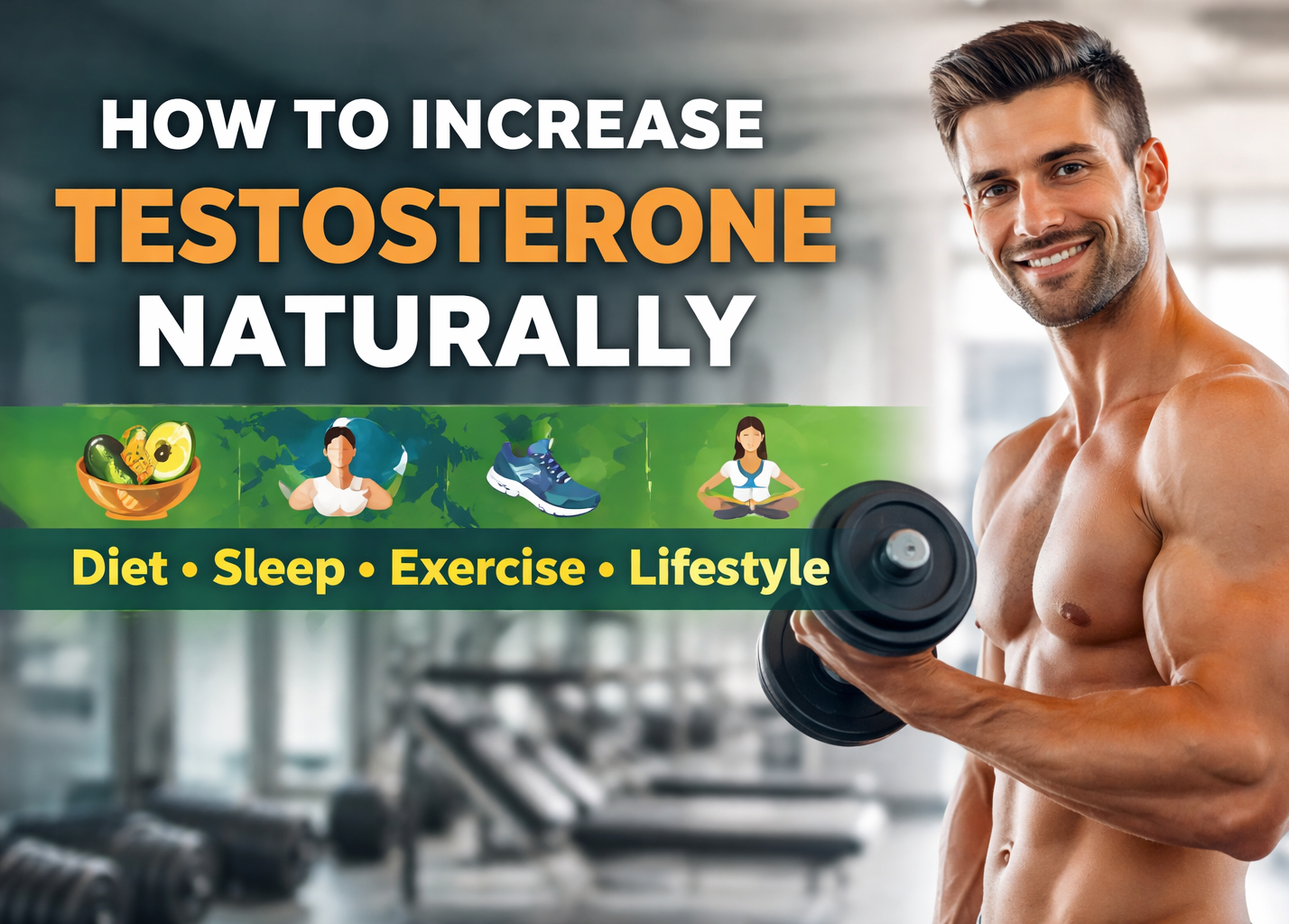
Testosterone is one of the most important hormones in the male body. It plays a key role in muscle growth, energy levels, mood, bone density, fat distribution, and sexual health. While testosterone naturally declines with age, many men experience low testosterone earlier due to lifestyle habits, stress, poor sleep, and diet.
The good news is that testosterone levels can often be improved naturally. This guide explains how to increase testosterone naturally using science-supported lifestyle changes, without relying on risky supplements or shortcuts.
What Is Testosterone and Why It Matters
Testosterone is a hormone produced mainly in the testes in men and in smaller amounts in women. It affects:
-
Muscle mass and strength
-
Fat metabolism
-
Energy and motivation
-
Mood and mental clarity
-
Libido and reproductive health
Low testosterone does not only affect older men. Many young men experience declining levels due to sedentary lifestyles, stress, obesity, and poor sleep patterns.
Low testosterone can affect energy, mood, and sexual health according to Mayo Clinic guidance.
Common Symptoms of Low Testosterone in Men
Low testosterone symptoms can vary, but commonly include:
-
Constant fatigue and low energy
-
Reduced muscle mass despite exercise
-
Increased belly fat
-
Low libido or sexual performance issues
-
Mood swings, irritability, or depression
-
Poor focus and brain fog
-
Difficulty recovering after workouts
If these symptoms persist, medical testing is recommended. However, lifestyle improvements can significantly support hormonal balance.
How to Increase Testosterone Naturally
1. Eat Foods That Support Testosterone Production
Diet has a direct impact on hormone levels. Certain nutrients are essential for testosterone synthesis.
Foods that increase testosterone naturally include:
-
Eggs (rich in healthy fats and vitamin D)
-
Fatty fish like salmon and tuna
-
Nuts and seeds, especially almonds and pumpkin seeds
-
Olive oil and avocado for healthy fats
-
Lean meats in moderation
-
Leafy green vegetables like spinach
-
Garlic and onions, which may support hormone signaling
Avoid extremely low-fat diets, as testosterone requires dietary fats for production.
2. Get Enough Quality Sleep
Sleep is one of the most underestimated factors affecting testosterone. Studies show that sleeping less than 6 hours per night can significantly reduce testosterone levels.
Tips to improve sleep for hormonal health:
-
Aim for 7–9 hours of sleep
-
Maintain consistent sleep and wake times
-
Avoid screens at least 1 hour before bed
-
Keep your room dark and cool
-
Reduce caffeine intake after evening
Good sleep supports natural testosterone release during deep sleep cycles.
3. Reduce Chronic Stress and Cortisol
Chronic stress increases cortisol, a hormone that directly suppresses testosterone production.
Ways to reduce stress naturally:
-
Daily physical activity
-
Meditation or deep breathing
-
Spending time outdoors
-
Limiting excessive social media usage
-
Maintaining work-life balance
Managing stress is not just mental health care — it directly impacts hormonal health.
4. Exercise the Right Way
Exercise is one of the most effective natural testosterone boosters, but not all workouts are equal.
Best exercises to boost testosterone naturally:
-
Strength training with compound movements
-
Squats, deadlifts, bench press
-
Short, intense workouts
-
Sprint training or HIIT
Avoid excessive cardio for long durations, as it may increase cortisol when overdone.
5. Maintain a Healthy Body Weight
Higher body fat levels are linked to lower testosterone. Fat tissue converts testosterone into estrogen, reducing available levels.
Healthy habits that support weight management:
-
Balanced diet with protein and fiber
-
Regular resistance training
-
Limiting processed sugar
-
Staying active throughout the day
Even moderate fat loss can lead to noticeable hormonal improvements.
6. Get Enough Sunlight and Vitamin D
Vitamin D functions more like a hormone than a vitamin. Low vitamin D levels are associated with lower testosterone.
Natural ways to support vitamin D:
-
Sun exposure for 15–30 minutes daily
-
Including vitamin D-rich foods like eggs and fish
Blood testing can confirm deficiency, and supplementation should only be considered when necessary.
7. Limit Alcohol and Avoid Smoking
Excessive alcohol intake interferes with testosterone production and increases estrogen levels.
Recommendations:
-
Limit alcohol to occasional consumption
-
Avoid binge drinking
-
Avoid smoking and nicotine products
Reducing alcohol alone can improve hormone balance over time.
8. Avoid Testosterone-Lowering Lifestyle Habits
Some daily habits quietly reduce testosterone levels:
-
Constant sleep deprivation
-
Excessive sugar intake
-
Sitting all day without movement
-
Overtraining without recovery
-
Chronic dieting
Small lifestyle changes, when done consistently, often produce better results than extreme measures.
What About Testosterone Supplements?
Many supplements claim to boost testosterone quickly. Most are either ineffective or poorly supported by research.
Supplements should never replace:
-
Proper nutrition
-
Sleep
-
Exercise
-
Stress management
Medical supervision is essential before considering hormone therapy or supplements.
When to See a Doctor
If lifestyle changes do not improve symptoms, or if symptoms are severe, consult a healthcare professional. Blood tests can determine whether testosterone levels are clinically low and require medical attention.
Frequently Asked Questions (FAQs)
Can you increase testosterone naturally without supplements?
Yes. Diet, exercise, sleep, stress management, and weight control are the most effective natural ways to support testosterone production.
Does masturbation lower testosterone levels?
Short-term testosterone fluctuations may occur, but there is no strong evidence that masturbation causes long-term testosterone reduction.
How long does it take to increase testosterone naturally?
Lifestyle improvements may show effects within a few weeks, but noticeable changes typically take 2–3 months of consistency.
Which exercise increases testosterone the most?
Heavy resistance training using compound movements like squats and deadlifts is most effective.
Does sleep really affect testosterone levels?
Yes. Poor sleep is one of the strongest lifestyle factors linked to low testosterone, even in young men. Quality sleep supports normal testosterone rhythms, and disruption may lower levels
Can stress reduce testosterone?
Chronic stress increases cortisol, which directly suppresses testosterone production.
Final Thoughts
Learning how to increase testosterone naturally is not about shortcuts or miracle fixes. It’s about creating an environment where your body can function optimally. Small, consistent improvements in diet, sleep, stress management, and exercise can significantly support hormonal health over time.
Instead of chasing quick results, focus on sustainable habits that improve both testosterone levels and overall well-being.
Read more blogs: