








New Delhi:
The national capital is grappling with an unsettling reality as official records reveal that more than 800 people were reported missing in Delhi in just the first 27 days of 2026, raising fresh concerns about public safety, child protection, and the effectiveness of tracking mechanisms in one of India’s largest metropolitan cities.
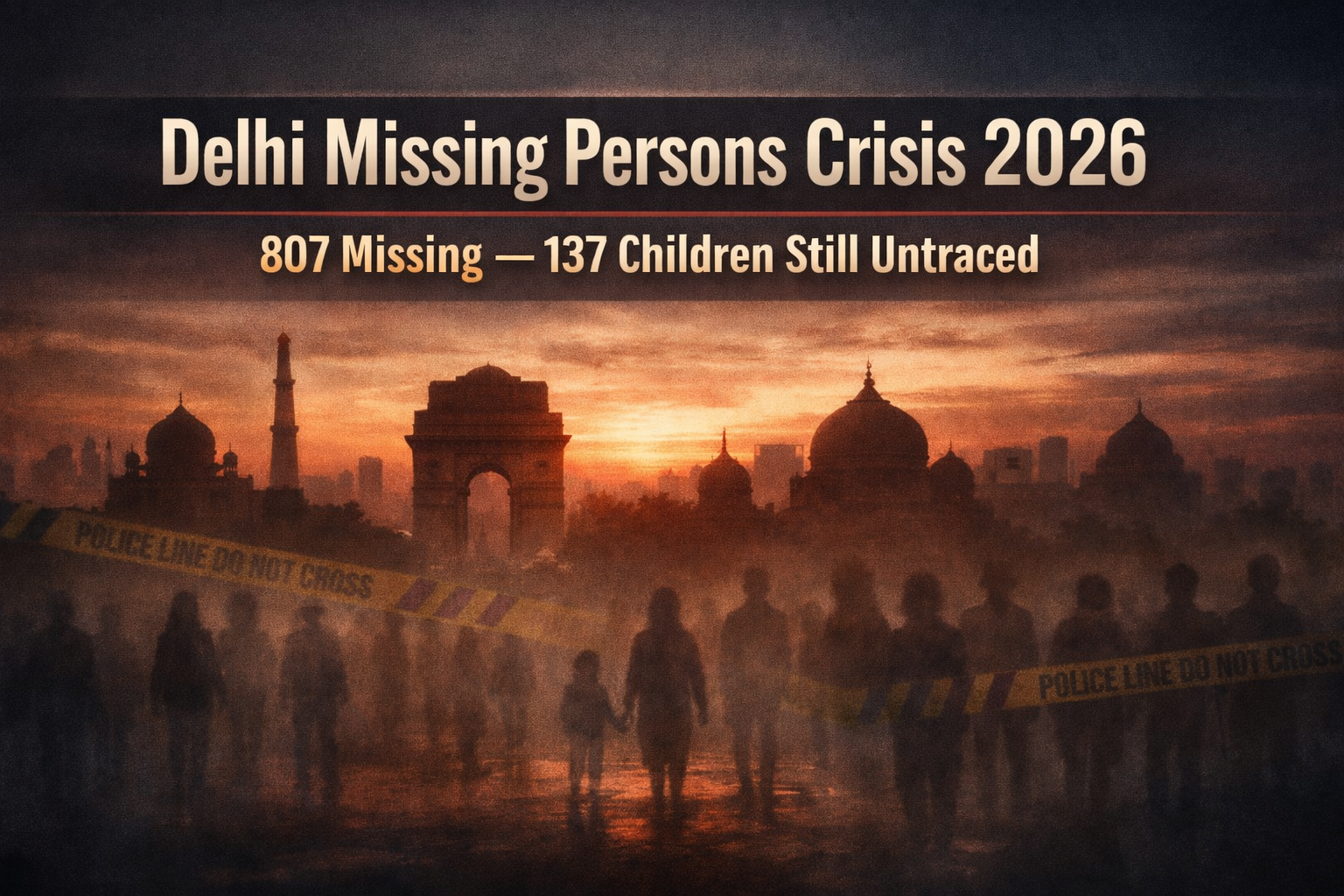
According to Delhi Police data, 807 missing person complaints were registered between January 1 and January 27, 2026. Of these, only 235 individuals were traced, while 572 people remain unaccounted for. Among the unresolved cases, 137 are children, a figure that has drawn particular alarm from child rights activists, law enforcement experts, and concerned citizens alike.
The numbers point to a worrying trend: on average, nearly 30 people went missing every single day during the first month of the year.
Children Among the Most Vulnerable
One of the most distressing aspects of the data is the high number of missing children, especially adolescent girls. Police records show that 191 children were reported missing during the period under review.
Out of these:
-
48 children were traced
-
137 children remain untraced
-
The remaining cases are under active investigation
A closer look at the figures reveals a significant gender imbalance:
-
120 of the untraced children are girls
-
17 are boys
This pattern has been consistent over several years and raises serious questions about the safety of young girls in urban environments, particularly those from economically vulnerable backgrounds.
Age-Wise Breakdown of Missing Children
The data further highlights that adolescents face the highest risk:
-
0–8 years: 9 missing, 6 untraced
-
8–12 years: 13 missing, 10 untraced
-
12–18 years: 169 missing, 121 untraced
Experts note that children in the 12–18 age group are especially vulnerable due to factors such as family conflicts, school dropouts, emotional distress, online exploitation, trafficking risks, and coercion by criminal networks.
Adult Missing Cases: A Growing Concern
While the plight of missing children demands urgent attention, adult cases make up the majority of the total missing persons reported.
Out of the 807 missing individuals:
-
616 were adults
-
181 adults were traced
-
435 adults remain untraced
Among those traced:
-
90 were men
-
91 were women
The nearly equal gender split among traced adults contrasts with the disproportionately high number of untraced girls among children, reinforcing concerns that women and girls remain more vulnerable to long-term disappearance.
Why Are So Many People Going Missing?
Law enforcement officials and social experts point to a combination of social, economic, and systemic factors contributing to the high number of missing cases in Delhi.
1. Migration and Urban Pressure
Delhi attracts thousands of migrants every year seeking employment, education, or better living conditions. Many arrive without strong social support systems, making it difficult to trace them if they go missing.
2. Family Disputes and Domestic Issues
A large number of missing cases, particularly among adolescents and women, are linked to:
-
Domestic violence
-
Forced marriages
-
Family pressure
-
Emotional distress
3. Trafficking and Exploitation Risks
Child rights groups have repeatedly warned that trafficking networks often target missing children, especially girls. Delhi’s location as a transit hub increases this risk.
4. Digital Vulnerabilities
With increasing online exposure, children and teenagers are more susceptible to:
-
Online grooming
-
Fake job offers
-
Emotional manipulation through social media
A Long-Standing Problem, Not a New One
The alarming figures from early 2026 are not an isolated spike. Long-term data paints an even more troubling picture.
Between 2016 and 2026, Delhi recorded over 60,000 missing children cases. While authorities successfully traced the majority, nearly 7,000 children remain untraced over the past decade.
This means that thousands of families are still waiting for answers, years after filing missing person complaints.
Despite multiple initiatives, including technological platforms like ZIPNET (Zonal Integrated Police Network) and nationwide alerts, a significant number of cases remain unresolved.
Police Efforts and Challenges
Delhi Police maintain that every missing person complaint is treated as a serious matter, particularly those involving minors. Special units, including Anti-Human Trafficking Units (AHTUs) and district-level missing persons cells, are tasked with investigations.
Measures currently in use include:
-
Circulating photographs to police stations nationwide
-
Using CCTV footage and mobile tracking
-
Coordinating with NGOs and shelter homes
-
Uploading cases on national databases
However, officials acknowledge challenges such as:
-
Delayed reporting by families
-
Lack of recent photographs
-
Incomplete personal details
-
Inter-state jurisdiction issues
The Human Cost Behind the Numbers
Beyond statistics lies a deeply human tragedy. Each missing person represents a family living in uncertainty — parents waiting for a phone call, siblings hoping for a sign, and children growing up without closure.
Psychologists note that families of missing persons often experience:
-
Chronic anxiety
-
Depression
-
Social isolation
-
Financial distress
For parents of missing children, the emotional toll can last a lifetime.
Role of Society and Citizens
Experts stress that tackling the missing persons crisis cannot rest solely on the police. Community awareness and public participation are crucial.
Citizens are encouraged to:
-
Report missing cases immediately — there is no legal waiting period
-
Share verified missing person alerts responsibly
-
Inform police about suspicious activities involving children
-
Support NGOs working with vulnerable populations
Schools, housing societies, and local organizations can also play a role by spreading awareness about child safety and reporting mechanisms.
What Needs to Change
Policy analysts argue that Delhi needs a multi-layered approach to reduce missing cases:
-
Faster inter-state coordination
-
Improved use of technology and AI-based facial recognition
-
Strengthened child protection services
-
More shelters and counselling centres
-
Continuous monitoring of repeat-risk zones
Most importantly, experts stress the need to shift focus from recovery alone to prevention.
A Wake-Up Call for the Capital
The fact that over 800 people went missing in less than a month is a stark reminder of the challenges Delhi continues to face as a growing megacity. While many cases may eventually be resolved, the high number of untraced children underscores an urgent need for sustained action.
As 2026 unfolds, the missing persons data serves as a wake-up call for authorities, policymakers, and society at large — a reminder that safety, especially for children, must remain a top priority.
Read more:
Over 800 people went missing in Delhi in first 27 days of 2026
Over 800 go missing in Delhi in early 2026, police data shows