








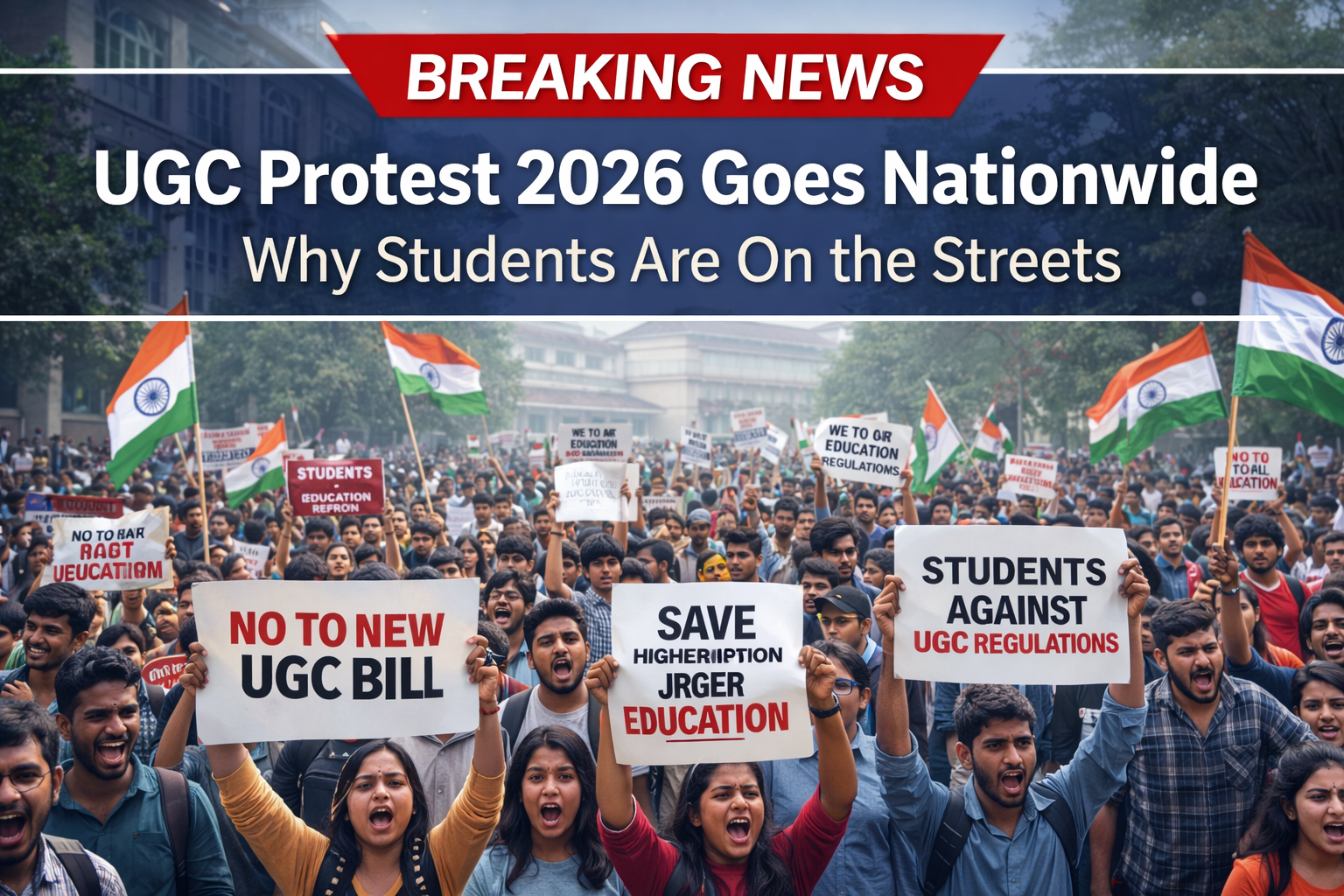
The UGC Protest 2026 has turned into a nationwide student movement. Across universities and colleges in India, students are taking to the streets, organizing marches, sit-ins, and online campaigns. The protests are centered around opposition to the new UGC Bill and UGC Act changes, which many students believe could reshape higher education in ways that harm their future.
From central universities to state colleges, the phrase “UGC protest latest news” is trending on search engines and social media. Students are demanding transparency, accountability, and protection of their academic rights.
This blog explains the UGC Protest 2026 in detail, why students are protesting, what their demands are, how the government has responded, and what this movement means for the future of higher education in India.
What Is the UGC Protest 2026?
The UGC Protest 2026 refers to widespread student demonstrations against proposed changes under the new UGC Act. These changes aim to reform the governance and regulation of universities across India.
Students argue that the reforms were introduced without adequate consultation and could lead to centralized control, reduced autonomy of universities, and increased commercialization of education.
As a result, student groups, university unions, and independent education activists have united to oppose the bill.
Why Is the UGC Protest 2026 Trending?
The protest is trending nationwide due to several key reasons:
• Large-scale participation by students
• Protests spreading across multiple states
• Strong presence on social media platforms
• Concerns about education affordability
• Fear over degree value and recognition
Search queries like UGC Protest 2026 explained, student protest against UGC bill, and UGC Act protest India are seeing sharp growth.
When and How Did the Protests Start?
The protests began soon after reports surfaced about the implementation timeline of the new UGC regulations. Student organizations started holding campus meetings, followed by peaceful demonstrations.
Within weeks, the movement expanded beyond individual universities and gained national attention.
Main Reasons Behind the UGC Protest 2026
Fear of Centralized Control Over Universities
One of the biggest concerns is that the new UGC framework may concentrate power at the central level. Students believe this could limit the freedom of universities to design courses, conduct examinations, and make academic decisions.
Concerns About Degree Value and Recognition
Students worry that changes in the regulatory structure may impact how degrees are recognized by employers and international institutions.
Final-year students are especially anxious about whether their degrees will maintain credibility.
Increased Commercialization of Higher Education
Many protesters believe the new system could encourage privatization and profit-driven education. This may make higher education expensive and inaccessible for students from middle-class and economically weaker backgrounds.
Lack of Student Consultation
A major reason behind the protests is the absence of student representation during the drafting of the bill. Students argue that policies affecting millions of learners should not be implemented without their participation.
Role of Social Media in UGC Protest 2026
Social media has played a powerful role in spreading awareness. Students are sharing protest videos, informational posts, and personal experiences.
Hashtags related to the UGC protest have helped unify students from different regions under a common cause.
This online visibility has also increased media coverage.
Universities Affected by the UGC Protest
The protests have been reported in:
• Central universities
• State universities
• Public colleges
• Student hostels and campuses
The movement has not remained limited to one region, making it a truly nationwide protest.
Student Demands During the UGC Protest 2026
Students are not only protesting but also presenting clear demands:
• Withdrawal or revision of controversial provisions
• Transparent dialogue with student representatives
• Protection of university autonomy
• Assurance on degree validity
• Affordable and inclusive education
Government’s Response to the UGC Protest
The government has stated that the UGC Bill reforms are being misunderstood. Officials claim the changes aim to improve education quality and global competitiveness.
Authorities have also said that feedback will be reviewed and that existing degrees will not lose validity.
However, students argue that verbal assurances are not enough without written guarantees.
Teachers and Faculty Support for the Protest
Many teachers and faculty members have expressed solidarity with students. Faculty concerns include:
• Academic freedom
• Job security
• Performance-based evaluations
• Research independence
This has strengthened the protest movement further.
Legal and Policy Concerns Raised by Experts
Education experts and policy analysts have pointed out that higher education involves both central and state responsibilities.
Some believe that the new UGC framework could lead to legal challenges if state autonomy is affected.
Comparison With Previous UGC Regulations
Earlier UGC regulations focused mainly on funding, approvals, and quality standards.
The new approach focuses on governance and accountability, which marks a significant policy shift.
This sudden change is one of the reasons students feel uncertain.
Impact of UGC Protest 2026 on Students
The protest has created awareness among students about education policies.
However, it has also caused stress due to uncertainty around exams, admissions, and academic schedules.
Students are demanding clear communication to reduce confusion.
Impact on Higher Education Institutions
Universities may need to adjust their systems if the bill is implemented.
Institutions with better resources may adapt faster, while smaller colleges may face challenges.
This could increase inequality within the education system.
Is the UGC Protest 2026 Justified?
Supporters of the UGC protest believe it is necessary to protect student rights and academic freedom.
Critics argue that reforms are essential and resistance may delay progress.
The reality lies somewhere in between, highlighting the need for dialogue rather than confrontation.
Importance of Student Participation in Education Policy
Education reforms affect the future of millions of students.
Including students in policy discussions can help build trust and ensure smoother implementation.
The UGC Protest 2026 highlights the importance of participatory governance.
What Students Should Do Right Now
Students should stay informed through official sources and avoid misinformation.
Peaceful protests, constructive discussions, and academic continuity should remain priorities.
What Happens Next?
The future of the protest depends on government response and willingness to engage with stakeholders.
Possible outcomes include amendments, delayed implementation, or clearer guidelines.
Conclusion
The UGC Protest 2026 going nationwide reflects deep concerns among students about the future of higher education in India. While reforms are necessary, ignoring student voices can lead to distrust and unrest.
A balanced approach involving dialogue, transparency, and student participation is essential to ensure that education reforms truly benefit learners.
The coming months will be crucial in shaping the direction of Indian higher education.
Related Blogs:
UGC Bill 2026: New Rules, Changes, Controversy and Benefits
FAQs
What is UGC Protest 2026?
UGC Protest 2026 refers to nationwide student demonstrations against proposed changes in the UGC Act that regulate higher education institutions in India.
Why are students protesting against the UGC Bill?
Students are protesting due to concerns about centralized control, loss of university autonomy, degree value, lack of consultation, and possible commercialization of education.
Which universities are affected by the UGC Protest 2026?
The protests have affected central universities, state universities, and public colleges across multiple states in India.
What are the main demands of students in the UGC protest?
Students are demanding transparency, revision or withdrawal of controversial provisions, protection of academic freedom, and assurance on degree validity.
Has the government responded to the UGC Protest 2026?
Yes, the government has stated that the reforms are misunderstood and claims the changes will improve education quality while protecting student interests.
Will the UGC Protest affect exams and admissions?
There may be temporary disruptions in some universities, but students are advised to follow official announcements for accurate updates.
Is the UGC Protest 2026 legal and peaceful?
Most protests have been peaceful and student-led, focusing on dialogue and awareness rather than violence.
What is the future of higher education after the UGC Protest?
The outcome depends on dialogue between students and policymakers. Revisions and clearer guidelines may shape future reforms.