







Healthcare delivery is shifting from reactive, fragmented systems toward proactive, intelligent, and patient-centric models. Agentic AI chatbots—autonomous conversational systems capable of reasoning, planning, and executing tasks—are emerging as a critical layer in this transformation. Unlike traditional rule-based bots, agentic chatbots operate with contextual awareness, clinical alignment, and decision intelligence, redefining how care is accessed and delivered.
Why Agentic AI Chatbots Represent a Breakthrough in Healthcare Systems
From Passive Automation to Autonomous Decision Support
Traditional healthcare chatbots respond to predefined queries. Agentic AI chatbots go further by independently evaluating context, setting sub-goals, and executing actions across systems. This autonomy enables real-time decision support, improving responsiveness in complex healthcare environments without constant human intervention.
Addressing Workforce Shortages at Scale
Healthcare systems face chronic shortages of clinicians and administrative staff. Agentic chatbots absorb high-volume cognitive tasks such as triage, documentation assistance, and care coordination, allowing limited human resources to focus on complex clinical judgment and patient empathy.
Continuous Care Beyond Clinical Settings
Care no longer stops at hospital discharge. Agentic AI chatbots provide continuous engagement through monitoring, reminders, and adaptive guidance. This persistent presence bridges gaps between visits, improving outcomes for chronic disease management and post-treatment recovery.
Intelligence Across Fragmented Healthcare Infrastructure
Healthcare IT ecosystems are notoriously siloed. Agentic chatbots act as intelligent orchestration layers, navigating EHRs, lab systems, scheduling platforms, and patient portals to deliver unified, context-rich interactions without disrupting legacy infrastructure.
Reducing Cognitive Load on Clinicians
By summarizing patient histories, surfacing relevant insights, and automating routine follow-ups, agentic chatbots reduce cognitive fatigue among clinicians. This directly impacts care quality, decision accuracy, and provider well-being in high-pressure environments.
Enabling Proactive and Preventive Care Models
Agentic AI chatbots analyze behavioral patterns, engagement signals, and health data trends to anticipate risks. This enables early interventions, shifting healthcare delivery from episodic treatment toward preventive, value-based care models.
Key Healthcare Use Cases Powered by Agentic AI Chatbots
Intelligent Patient Triage and Routing
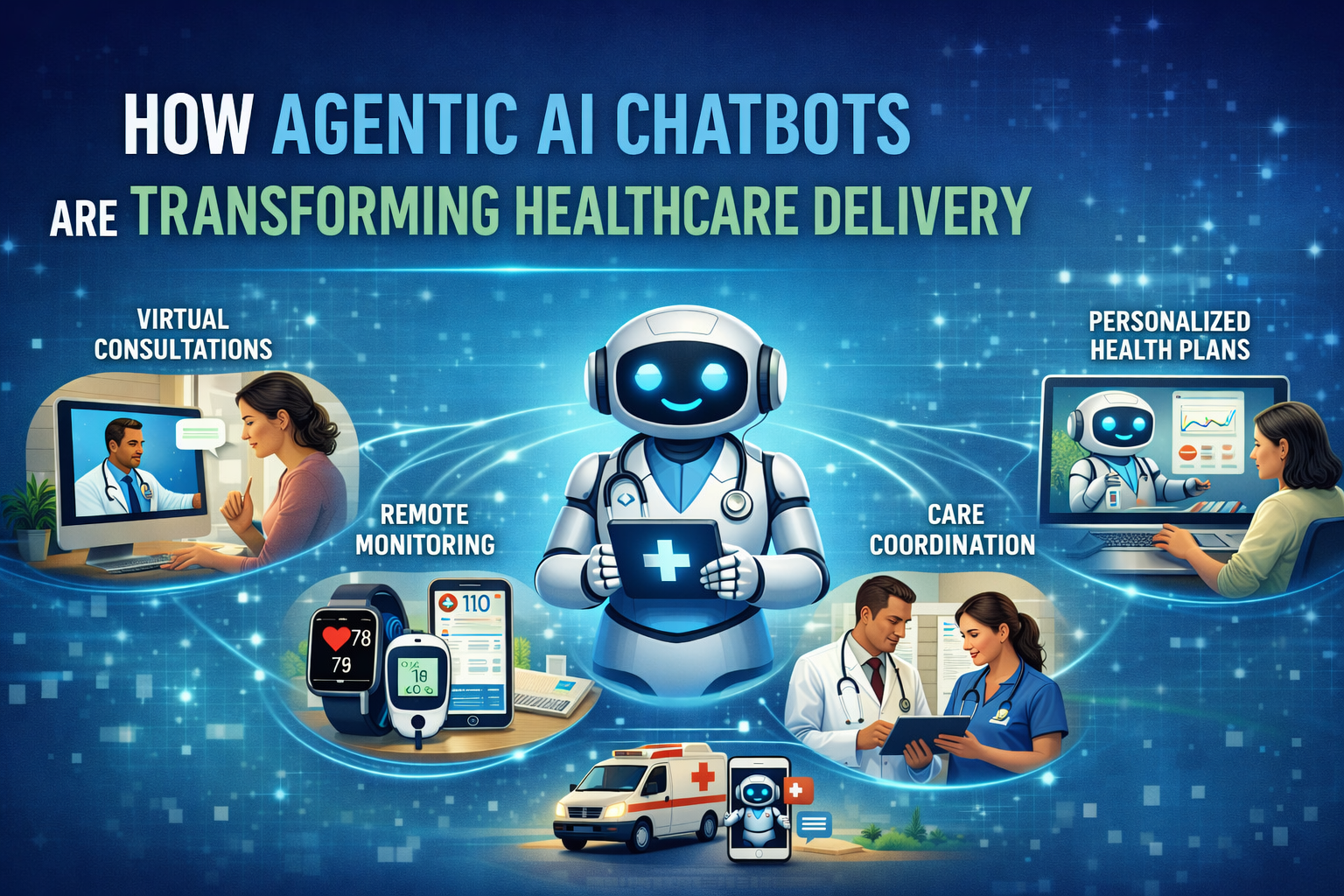
Agentic chatbots conduct dynamic symptom assessments, evaluate urgency, and route patients to appropriate care pathways. Unlike static questionnaires, they adapt questions in real time, improving triage accuracy while reducing unnecessary emergency visits and wait times.
Personalized Patient Engagement and Education
Healthcare literacy varies widely. Agentic chatbots tailor educational content based on patient profiles, conditions, and comprehension levels, ensuring individuals receive relevant, understandable guidance that improves adherence and long-term engagement.
Care Coordination Across Multidisciplinary Teams
Modern care involves multiple stakeholders. Agentic AI chatbots coordinate appointments, follow-ups, and communications across departments, reducing delays and misalignment while improving continuity of care for complex cases.
Medication Management and Adherence Monitoring
Non-adherence remains a major challenge. Agentic chatbots track medication schedules, identify patterns of missed doses, and proactively intervene with reminders or alerts, supporting better outcomes and reducing avoidable readmissions.
Administrative Workflow Automation
From insurance verification to discharge summaries, administrative complexity burdens healthcare systems. Agentic chatbots automate these workflows intelligently, reducing processing time, errors, and operational costs without compromising compliance.
Remote Patient Monitoring and Escalation
Agentic chatbots integrate with wearables and remote monitoring tools to track vitals and symptoms. When anomalies arise, they escalate issues to clinicians with contextual summaries, enabling timely intervention without constant manual oversight.
Strategic Considerations for Deploying Agentic AI Chatbots in Healthcare
Designing for Clinical Safety and Accuracy
Healthcare AI must prioritize safety. Agentic chatbots require rigorous validation, clinical oversight, and fail-safe escalation mechanisms to ensure recommendations remain supportive rather than diagnostic or prescriptive beyond approved boundaries.
Privacy, Security, and Regulatory Compliance
Patient trust is foundational. Agentic chatbot architectures must incorporate encryption, access controls, audit trails, and compliance with healthcare regulations to safeguard sensitive data across all conversational and autonomous actions.
Human-in-the-Loop Governance Models
Despite their autonomy, agentic chatbots must operate within governed frameworks. Human oversight ensures ethical decision-making, mitigates risk, and maintains accountability—especially in high-stakes clinical scenarios.
Interoperability With Existing Health Systems
Healthcare organizations cannot afford system disruption. Successful agentic chatbot deployment depends on seamless interoperability with EHRs, imaging systems, billing platforms, and telehealth tools through standardized APIs and secure integrations.
Selecting the Right AI Implementation Partner
Agentic AI in healthcare demands domain expertise, architectural maturity, and ethical design. Partnering with providers offering specialized AI Chatbot development services ensures solutions are clinically aligned, scalable, and future-ready.
Continuous Learning and Outcome Measurement
Agentic chatbots must evolve with medical knowledge and patient behavior. Continuous model refinement, outcome tracking, and performance audits are essential to ensure long-term effectiveness and alignment with healthcare quality benchmarks.
Executive Takeaway
Agentic AI chatbots represent a fundamental shift in healthcare delivery—from static automation to intelligent, autonomous care enablement. When deployed responsibly, they enhance access, reduce system strain, and support clinicians without replacing human judgment. Healthcare organizations that invest early in agentic AI will define the next generation of resilient, patient-centric care delivery.